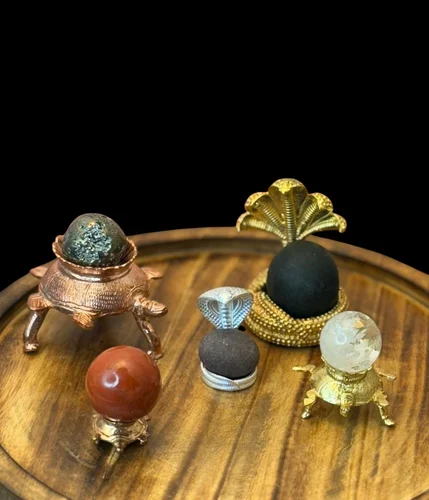
Why Five? The Body Itself Is Built in Fives
This is not an arbitrary number borrowed for ritual convenience. The human being is structurally organized into groups of five:
- Pancha-butas — the five gross elements that compose the physical body – Akasha (ether), Vayu (air), Agni (fire), Jala (water) and Prtvi (earth)
- Pancha-karmendriyas — the five organs of action – Vak (speech), Pani (hands), Pada (legs), Payu (anus) & Upastha (genitals)
- Pancha-gnanendriyas — the five organs of perception – Shrotra (ears), Chakshu (eyes), Ghrana (nose), Rasana (tongue) & Tvak (skin)
- Pancha-pranas — the five vital breaths/life-forces – Prana, Apana, Udana, Samana & Vyana
- Pancha-koshas — the five sheaths that layer over the Atman – Annamaya Kosha, Pranamaya Kosha, Manomaya Kosha, Vignanamaya Kosha & Anandamaya Kosha
- Pancha-kleshas — the five afflictions that bind the jiva to samsara – Avidya (ignorance), Asmita (egoism), Raga (attachment), Dvesha (aversion) & Abhinivesha (fear of death & survival instincts)
So, to understand all these, to live with all these, to master all these – Panchayatana Puja has been blessed to us by our shastras.
Panchayatana Puja is a framework of five seats — one center, four surrounding. The center is not fixed to a single divinity; it changes according to the worshipper’s tradition.
- In Saura Vidya, Surya Bhagavan becomes the puja nayaka.
- In Shaiva worship, Shiva becomes the puja nayaka.
- In Shakta worship, Amba becomes the puja nayika.
- In Ganapatya worship, Ganapati becomes the puja nayaka.
In Vaishnava Sampradaya, worship centers on the Shalagrama alone — they see all in Mahavishnu himself. Their system of worship is called Thiruvaradhanam.
To perform this puja, one must first receive Samashrayanam from their Kula Acharya. Samashrayanam means surrendering to the Acharya. Only after receiving this from the Acharya, who teaches the puja, does one become eligible to worship the Shalagrama.
The Five Tattvas of Panchayatana Puja
In Panchayatana Puja, each deity represents one of the five tattvas:
- Shiva represents Akasha Tattva
- Shakti represents Vayu Tattva
- Ganapati represents Prithvi Tattva
- Vishnu represents Jala Tattva
- Surya represents Agni Tattva
All five tattvas are interlinked with each other for creation, preservation, and destruction. Based upon the puja nayaka — the divinity occupying the center — that one tattva dominates over the rest of the four. Based on this, the practitioner gets the spiritual experiences.
Surya, Vishnu, and Shakti — Seated Yet Not Separate
Surya Bhagavan and Bhagavan Vishnu remain no different from the rest of the three, though they hold a separate seat and receive a separate worship.
When it comes to Shakti — she is not worshipped alone. She is worshipped as a Shiva Kudumba, only to let us understand that Shakti has to be worshipped along with Shiva, for the common people, for various reasons.
Panchayatana Puja Shilas
As this Panchayatana Puja takes one towards the path of Advaita, here we worship the idols that remain as arupa-rupa — meaning that which has rupa, yet has no angas of the rupa.
Shiva – Bana Linga from Narmada River
Vishnu – Shalagrama from Gandaki River
Ganesha – Shonabhadra from Sone River
Surya – Sphatika from Vallam River
Amba – Swarnamukhi from Swarnamukhi River
These are Swayambhu (self-manifested) stones — not sculpted or carved idols. This is part of why they connect to the arupa-rupa point we made earlier: naturally occurring form, not fashioned by human hands.
So, Sphatika carved with Surya bhagavan or Vishnu idol carved in Shalagrama or Ganapati carved in Shonabhadra are all to be avoided.
Just use the stones as it is!!
To read about the Ganapati Panchayatana Puja, you shall click here.