
Ganapati – The Swamy under whom the ganas work
Gana-pati means the Lord under whom the ganas function. He is therefore worshipped before undertaking any significant task, seeking His grace so that the various forces involved in the accomplishment of that task do not become obstacles.
This is why Ganapati is worshipped by everyone — including the worshippers of every other form of divinity and even by the deities. Before beginning the worship of a deity, commencing a ritual, or undertaking any important work, the grace of Ganapati is sought so that the task may proceed without obstacles and reach its proper completion.
The grace of Ganapati is not merely an optional addition to a ritual. It is sought for the unobstructed accomplishment of the task itself.
There is no substitute for Ganapati. And, likewise, there is no substitute for any other form of divinity.
This distinction becomes particularly important in Panchayatana Puja. Whichever deity is placed in the centre according to the worshipper’s prescribed tradition or chosen form of worship, Ganapati must still be worshipped first.
The central position in Panchayatana Puja does not make the other deities unnecessary, nor does it turn the worship into an ishta-based exercise where one deity simply replaces another. Each form has its own place and significance.
Therefore, even when Ganapati is not the deity occupying the central position in the Panchayatana arrangement, His worship is not to be omitted. Ganapati is worshipped first, and the Panchayatana Puja proceeds thereafter.
There is no question of choosing one form of divinity as a substitute for another. The very foundation of this worship is to understand and honour the distinct place of each divine form.
बीजापूर गदेक्षु कार्मुक रुजा चक्राब्ज पाशोत्पल
व्रीह्यग्र स्वविषाण रत्नकलश प्रोद्यत्कराम्भोरुहः ।
ध्येयो वल्लभया सपद्मकरया श्लिष्टोज्ज्वलद्भूषया
विश्वोत्पत्ति विपत्ति संस्थितिकरो विघ्नेश इष्टार्थदः ॥
bījāpūra gadekṣu kārmuka-rujā cakrābja pāśotpala
vrīhyagra svaviṣāṇa ratna-kalaśa prodyat karāmbhoruhaḥ |
dhyeyo vallabhayā sapadma-karayā śliṣṭojjvalad-bhūṣayā
viśvotpatti-vipatti-saṃsthiti-karo vighneśa iṣṭārthadaḥ ||
This dhyana asks us to meditate upon Mahaganapati, visualising Him in His majestic form with ten hands, each carrying a different object.
In His hands, He holds a pomegranate, a mace, a sugarcane bow, a trident, a discus, a lotus, a noose, a blue lotus, the tip of a rice stalk, His own tusk, and a jewelled pot. His raised hands are described as being beautiful like lotuses.
Mahaganapati is accompanied by Vallabha, who holds a lotus in Her hand. She is closely united with Him and is beautifully adorned with brilliant ornaments.
The dhyana then reveals the greatness of Mahaganapati beyond His familiar role as the remover of obstacles. He is the one who brings about the creation, dissolution and sustenance of the entire universe.
He is Vighnesha — the Lord of obstacles, and He is also Ishtarthada — the one who grants the desired objective or result.
Thus, this is not merely a meditation upon Ganapati as someone who removes obstacles before a task. It presents Mahaganapati as the cosmic Lord who governs the very processes of creation, sustenance and dissolution, while granting the fulfilment of the seeker’s desired purpose.
The Shonabhadra Shila
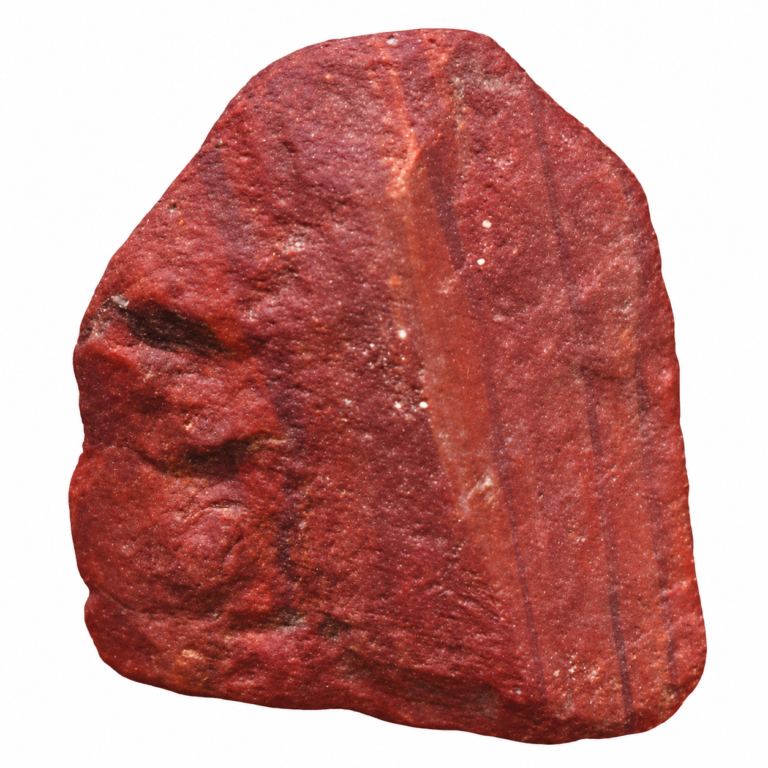
In Panchayatana Puja, Ganapati is worshipped in the form of the Shonabhadra shila, a naturally occurring sacred stone associated with the Shona River. Just as each of the other four deities has a particular shila associated with them, the Shonabhadra shila is the traditional form in which Ganapati is worshipped in Panchayatana Puja.
This shila is not to be treated as an ordinary stone or simply as a replacement for an image of Ganapati. It is worshipped as the prescribed representation of Ganapati in the Panchayatana arrangement.
So, one must meditate Ganapati in this form and worship the shonebhadra stone along with the other mantras allied to the worship of Ganapati under Panchayatana Puja.
Ganapati represents Prithvi Tattva, the Earth principle. Earth represents stability, foundation and manifestation. This is why Ganapati has such an important place at the beginning of the spiritual journey — anything that is to rise must first have a firm foundation.
Therefore, Ganapati cannot simply be bypassed while worshipping another chosen form of divinity. Ganapati provides the foundation upon which the worship itself can proceed without obstacles.
So, avoiding Ganapati is avoiding one’s own material & spiritual progress!!
Panchayatana stones are not meant to be carved into the physical form of the respective Swamy / Amba.
To know – what generally Panchayatana puja is? You shall click here.
Frequently Asked Questions
1. Why is Ganapati worshipped first in Panchayatana Puja?
Ganapati is worshipped first because His grace is sought for the unobstructed accomplishment of the worship and the task being undertaken. His position as the deity placed in the centre of the Panchayatana is not the reason for worshipping Him first.
2. Does Ganapati have to be worshipped first even when another deity is placed in the centre of Panchayatana Puja?
Yes. The deity placed in the centre may vary according to the prescribed tradition or chosen form of worship, but Ganapati is still worshipped first. The central deity does not replace Ganapati or make His worship unnecessary.
3. Who is worshipped as Ganapati in Panchayatana Puja?
Ganapati is worshipped through the Shonabhadra Shila, the naturally occurring sacred stone traditionally associated with Ganapati in Panchayatana Puja.
4. What is the Shonabhadra Shila?
The Shonabhadra Shila is a naturally occurring sacred stone associated with the Shona River. In Panchayatana Puja, it serves as the traditional natural representation through which Ganapati is worshipped.
5. Is the Shonabhadra Shila carved into the form of Ganapati?
No. The Shonabhadra Shila is worshipped in its natural form. It is not meant to be carved into an image of Ganapati. Within Panchayatana Puja, the Shila itself is worshipped as the prescribed representation of Ganapati.
6. What form of Ganapati is meditated upon in this Panchayatana Puja?
The dhyana describes Mahaganapati, a majestic form with multiple arms holding various objects, including a pomegranate, mace, sugarcane bow, trident, discus, lotus, noose, blue lotus, rice stalk, His own tusk and a jewelled pot. Mahaganapati is accompanied by Vallabha.
7. What does the Mahaganapati Dhyana Shloka describe?
The dhyana shloka describes the form of Mahaganapati and the objects held in His hands. It also describes Vallabha beside Him and declares Mahaganapati to be the one responsible for the creation, dissolution and sustenance of the universe, as well as the giver of the desired result.
8. What Tattva does Ganapati represent in Panchayatana Puja?
Ganapati represents Prithvi Tattva, the Earth principle, in this Panchayatana worship. Prithvi represents stability, foundation and manifestation.
9. Can another deity be substituted for Ganapati in Panchayatana Puja?
No. The worship of one form of divinity does not make another form unnecessary. Each Devata has a distinct place and significance within Panchayatana Puja, and Ganapati’s worship should not be bypassed simply because another deity is one’s chosen form of worship.
10. If my Ishta Devata is another deity, can I worship only that deity in Panchayatana Puja?
No. Panchayatana Puja is not a system in which one deity substitutes for all the others according to personal preference. The central deity may be determined according to the prescribed tradition, and based on this, the positions of the remaining four divinities change. Ganapati is worshipped first regardless of which deity occupies the centre.

- The 9 Enemies of Human Life and How Maa Dhumavati Destroys Them: The Secret of Nava Shatru Shamana - October 7, 2026
- Introduction to tripurA rahasyam – part – 4 – sukha vs duHkha - September 21, 2026
- Aghora Ganapati: An In-Depth Technical Study of His Vidya, Forces, and Guardians - September 21, 2026
