
In the profound wisdom of Tantra Shastra, Maa Dhumavati holds a unique and formidable position as the seventh of the sacred Dashamahavidyas (दशमहाविद्या). While auspicious forms like Tripura Sundari or Kamala represent manifest beauty, light, and royal splendour, Dhumavati Devi embodies the ultimate primordial state—the smoke (Dhūma) remaining after cosmic dissolution, the unmanifest potential, and the fierce force of ascetic transcendence.
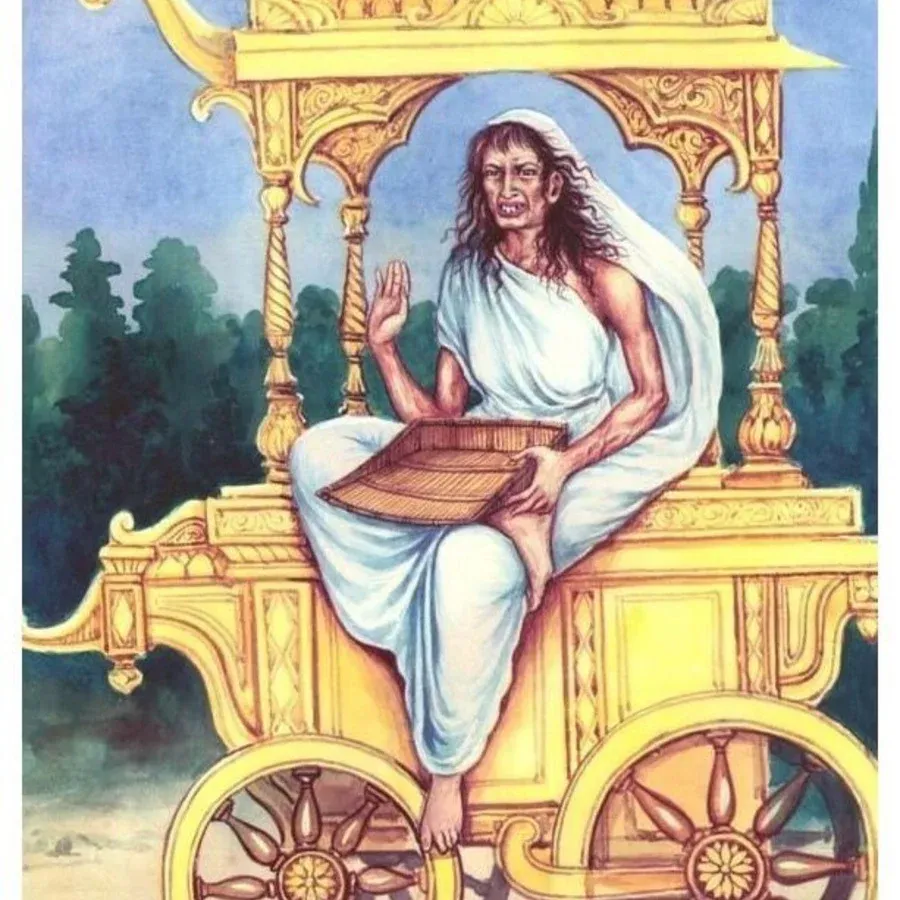
Depicted iconographically as an elderly widow carrying a winnowing basket (Śūrpa), riding a horseless chariot bearing a crow emblem, and dwelling in cremation grounds and lonely desolate realms, Maa Dhumavati is often misunderstood by superficial observers. In authentic Dhumavati Tantra, she is revered as Shatru Vinashini (the supreme annihilator of adversaries) and Jyeshtha Lakshmi (the elder manifestation of Lakshmi). She does not simply conquer outward worldly adversaries; she systematically uproots the deep existential afflictions that choke spiritual and material progress.
The Shastric Concept of the 9 Enemies (नव शत्रु – Nava Shatru)
It is not only a person who is an enemy in our life. The shastras describe nine kinds of enemies, and because of them the progress of our life cannot happen as we wish. These nine kinds of enemies are as follows:
1. प्रत्यक्ष शत्रु (Pratyaksha Shatru)
One with whom we hold a feeling of enmity.
2. अप्रत्यक्ष शत्रु (Apratyaksha Shatru)
One who does not openly come and stand before us in bodily form. But all his activities are enemy-like, and they always, at all times, work only to our harm.
3. विश्वासघाती शत्रु (Vishvasaghati Shatru)
One who is our friend, our partner in trade and business, whom we trust. When the time comes, that very person deceives us, or plunges a knife into our back. Such enemies are extremely harmful.
4. ऋण शत्रु (Rina Shatru)
Debt (borrowing) is by itself a complete enemy. When the person demanding money comes morning and evening and sits on our chest, the pain we feel can be understood only by one who has suffered it. Therefore this enemy too is a complete obstacle to the advancement of our life.
5. दरिद्रता शत्रु (Daridrata Shatru)
Poverty, or lack of wealth, is a powerful enemy of our life. When there is poverty in the house, we cannot do what we wish to do in life. We cannot achieve the advancement we desire, because poverty stands blocking the road at every step of our life, and at every step we have to suffer humiliation. The enemy in the form of poverty is a complete obstacle in our life.
6. रोग शत्रु (Roga Shatru)
Even when everything in life has been obtained, if a person remains sick, feeble and weak, or is constantly surrounded by new illnesses, all his enthusiasm and vigour end on their own, and the zest for living does not remain. That is why gaining freedom from the enemy in the form of disease, and becoming happy, is an important goal of life.
7. कुभार्या शत्रु (Kubharya Shatru)
If one gets a wife in life who is of good character, devoted to her husband, obedient and of a dedicated nature, household life can run properly. Marriage is ordained for a happy life. But such good fortune does not come to everyone. Sometimes the wife is on the wrong path, self-willed, insulting at every step, fond of quarrels, discontented, or willing to separate you from your family & friends. Then the happiness hoped for is not obtained, and the wife certainly becomes an enemy. Out of fear of society, the husband cannot say anything to her. Swallowing draught after draught of humiliation, he ends his life in a state of anxiety.
8. कुपुत्र शत्रु (Kuputra Shatru)
If there is no son, a person becomes the target of taunts of childlessness in society and becomes an object of criticism. Thus the absence of a son is like an enemy. And if there is a son who is uneducated, foolish, of corrupt conduct and on the wrong path, does not obey, does not earn properly, is a spendthrift and extravagant, or is lazy and arrogant, then such a son is also regarded as an enemy. One who is himself never at peace, how can he give peace to his parents! There is constant worry over such a son.
9. भाग्यहीनता शत्रु (Bhagyahinata Shatru)
Our fortune itself may be weak. We may make tireless efforts for good and still not gain full success. We may labour hard and not get the intended result. We may toil in trade and business at the risk of our life and gain no profit from it. Then the fault is held to be that of fortune, and such fortune is also powerful. That is why it is said:
“भाग्यं फलति सर्वत्र न च विद्या न पौरुषं।”
That line means: “Fortune alone bears fruit everywhere; neither learning nor manly effort does.”
How Dhumavati Tantra Destroys the Nava Shatru
Why do esoteric seekers approach Maa Dhumavati specifically to dissolve these nine adversaries?
In the cosmology of Dhumavati Tantra, the Goddess embodies the primordial fire of time that reduces cosmic illusion and adversity to ashes. When human efforts hit an unyielding wall against chronic karmic obstacles, the fierce grace of Dhumavati Devi penetrates to the root:
- Neutralizing Adversaries: Dhumavati Sadhana silences malicious slander, paralyzes visible opponents (Pratyaksha Shatru), and dissolves hidden occult and psychological malice (Apratyaksha Shatru).
- Eradicating Poverty & Debt: As Jyeshtha Lakshmi, her appeasement dissolves the spiritual obstruction of debt (Rina Shatru) and lack (Daridrata Shatru), paving the way for stable abundance.
- Dispelling Chronic Disease: Traditional Dhumavati rituals conducted at the appropriate time are renowned for banishing persistent, unyielding illnesses (Roga Shatru).
- Alleviating Misfortune: Dhumavati governs malefic planetary combinations involving Ketu, Rahu, and Saturn, untying the karmic knots of adverse fortune (Bhagyahinata Shatru).
Frequently Asked Questions (FAQ)
What makes Maa Dhumavati unique among the Dashamahavidyas?
Maa Dhumavati is the seventh Mahavidya, representing the divine void, transcendence over worldly vanity, and the transformative power of ascetic sorrow. She dissolves all external and internal enemies, granting fearlessness and spiritual liberation.
Can householders worship Dhumavati Devi?
Yes. While intense solitary nocturnal Tantric sadhanas in smashana are meant strictly for renunciates and initiated upasakas, householders can pray to Maa Dhumavati for relief from enemies, chronic disease, and poverty through temple pujas, stotras, and guided pariharas.
Which day is most auspicious for Dhumavati Puja?
Saturday, Amavasya (New Moon), Krishna Paksha Ashtami, and Krishna Paksha Chaturdashi during twilight hours or night are considered the most auspicious periods for Dhumavati Devi parihara rituals.
Overcome Obstacles Through Shastric Guidance
If persistent adversaries, financial stagnation, or unyielding life challenges are hindering your progress, discover traditional remedies rooted in authentic lineages. Explore our Authentic Astrological Consultation or learn about our lineage-guided Parihara Pujas at Kanchana Pitham.

- The 9 Enemies of Human Life and How Maa Dhumavati Destroys Them: The Secret of Nava Shatru Shamana - October 7, 2026
- Introduction to tripurA rahasyam – part – 4 – sukha vs duHkha - September 21, 2026
- Aghora Ganapati: An In-Depth Technical Study of His Vidya, Forces, and Guardians - September 21, 2026
