
This master series titled Kamakhya Tattva Bodha delves deep into the sacred lore, spiritual significance, and esoteric truths of the Kamakhya Kshetra — not merely as a place of pilgrimage, but as a living embodiment of Mahamaya. Each episode unveils a layer of traditional wisdom, cutting through modern misconceptions and revealing how the Goddess works through karma, tapas, and divine intent. Begin here to understand Kamakhya not just through text, but through tattva — through living Truth. You shall click here to obtain the complete e-book.
What is Kamakhya? The Sovereign Mahamaya of Desire and Liberation
In the sacred traditions of Shakta Tantra, Kamakhya is revered not as a mythological figure or localized deity, but as the supreme, all-encompassing Mahamaya — the primal consciousness and cosmic matrix from which all existence unfolds. In authentic scriptures such as the Kalika Purana and Yogini Tantra, Kamakhya is celebrated as the living embodiment of Kamakala, the primordial triadic light (Bindu and Visarga) through which the unmanifest Absolute expresses itself as the vibrant universe.
The name Kamakhya itself conveys the deepest metaphysical secret of spiritual transformation: Kama (the sacred creative impulse, longing, and yearning for divine union) and Akhya (the renowned, celebrated, or reborn). Also, it says bluntly – The narration of Kamadeva.
She is the supreme mother who purifies desire from the bondage of ego and transmutes it into the blazing fire of spiritual realization. At Kanchana Pitham, the Kamakhya Tattva Bodha series was composed to restore this unbroken shastric perspective, dispelling modern misconceptions that equate Tantra with indulgence and revealing the austere, diamond-hard discipline at the heart of Kamakhya Upasana.
The Complete Kamakhya Story: From Kamadeva’s Ashes to the Yoni Peetha
The eternal Kamakhya story is an epic cosmic choreography spanning multiple cosmic cycles, testing gods, sages, and seekers alike. Unlike superficial tellings that reduce sacred history to romance, the authentic Kamakhya story preserved in the Kalika Purana reveals how karma, tapas, and divine destiny unfold with uncompromising precision:
- The Incineration of Kamadeva at Bhasmachala: When the gods sought to disturb Mahadeva’s deep samadhi to birth a warrior (Kartikeya) capable of vanquishing Tarakasura, Kamadeva fired his flower arrows of desire. Shiva’s third eye blazed, reducing Kamadeva to ashes instantly. This fiery event established that raw desire without tapas is annihilated when confronted with pure consciousness.
- The Daksha Yajna and Sati’s Mahasamadhi: Mahamaya descended as Sati, daughter of Daksha Prajapati. When Daksha’s pride and ego insulted Shiva during the great sacrifice, Sati invoked her yogic fire and dissolved her mortal form, fulfilling her cosmic vow.
- Shiva’s Rudra Tandava and the Scattering of Shakti Peethas: Gripped by divine grief and wrath, Mahadeva carried the sacred body of Sati across the cosmos in a dance of dissolution. To preserve creation, Brahma, Vishnu, and Shani Bhagavan entered the form and dispersed Her sacred limbs across Bharatavarsha, consecrating the 51 Mahapithas.
- The Descent of the Yoni Peetha upon Nilachal Hill: The most esoteric and sanctified part of the Mother’s form — the Yoni Peetha (the cosmic organ of generation and dissolution) — descended upon Nilachal Hill in Kamarupa (Guwahati, Assam).
- The Rebirth of Kamadeva as Ananga: At the very spot where the Yoni fell, Kamadeva performed arduous tapasya to Amba. Pleased by his devotion, the Goddess restored his form and identity, making him Ananga (the bodiless force of divine attraction) and giving the sacred hill the name Kamakhya — the realm where Kama regained his name and form.
- The Hubris of Narakasura & the Curse of Sage Vashishta: In a later era, the asura king Narakasura attempted to win the Goddess through arrogance and forced desire, meeting his doom. When Sage Vashishta was insolently barred from entering the sanctum by Narakasura, he cast a curse upon the hill, veiled its worship, and inaugurated the secret, esoteric stream of Vamachara sadhana.
Kamakhya Temple: Secrets of Nilachal Hill & The Aniconic Garbhagriha
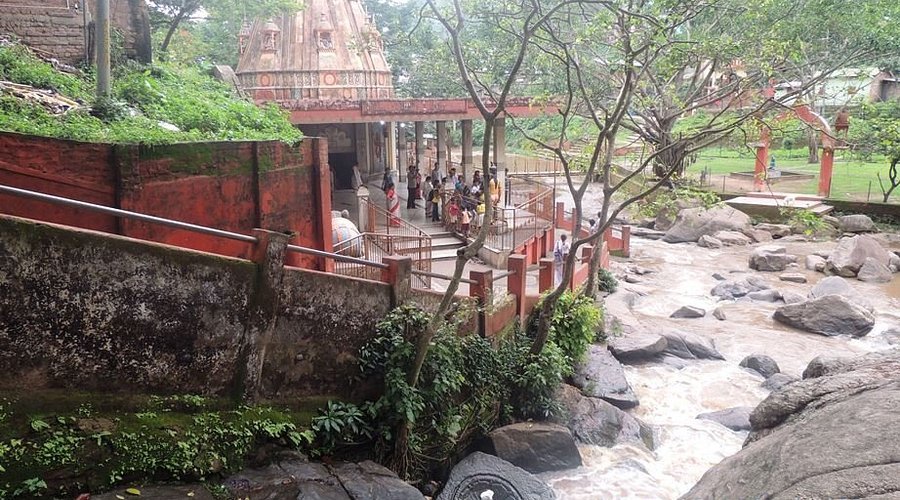
The sacred Kamakhya Temple situated atop Nilachal Hill in Guwahati, Assam, stands as the paramount center among all 51 Shakti Peethas. The architecture, sanctum, and rituals of the Kamakhya Temple embody the highest mysteries of Shakta metaphysics:
- The Garbhagriha without an Idol: Unlike typical Hindu temples housing sculpted stone or bronze deities, the inner sanctum of the Kamakhya Temple contains no sculpted murti. Instead, the garbhagriha is a dark, subterranean natural cave where a cleft in the bedrock, shaped naturally like a vulva (Yoni), is venerated. A perennial natural underground mountain spring continuously flows over this stone, keeping it perpetually moist and sanctified with sacred water.
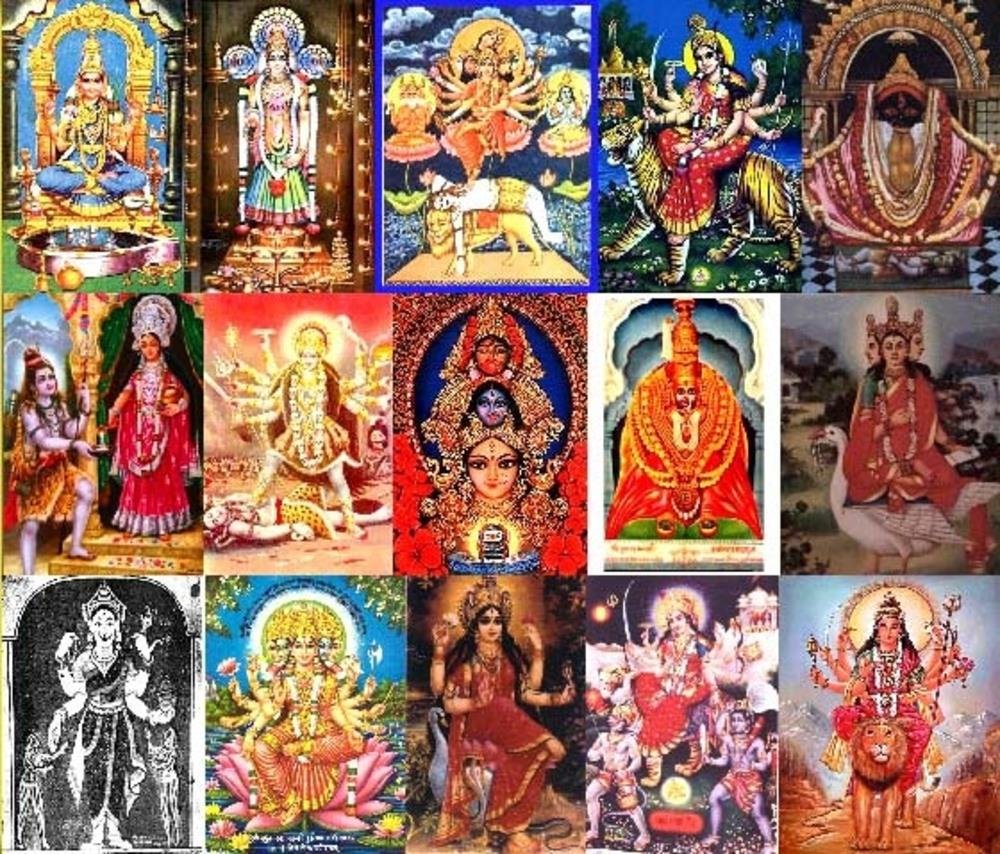
- The Sacred Mandala of the 10 Mahavidyas: Nilachal Hill is a living tantric yantra. The main Kamakhya Temple is accompanied by individual ancient shrines dedicated to the Dashamahavidyas: Kali, Tara, Shodashi (Tripura Sundari), Bhuvaneshwari, Bhairavi, Chhinnamasta, Dhumavati, Bagalamukhi, Matangi, and Kamalatmika. Worshipping at Kamakhya connects the sadhaka to the totality of the Shakta cosmic pantheon.
- Ambubachi Mela — The Annual Cosmic Regeneration: Every year during the monsoon month of Aashadha (mid-June), the Kamakhya Temple observes the world-renowned Ambubachi Mela. This period marks the annual menstruation and fertile rejuvenation of Mother Earth. The temple doors remain closed for three days as the subterranean spring turns red. On the fourth day, the doors are reopened, and thousands of devotees receive the revered Raktavastra (sanctified red cloth) as supreme prasada.
- Living Tantric Traditions: Preserved by traditional families of Sebayats and initiated upasakas, the temple continues unbroken rituals conforming to both Vedic and Kaula Shakta tantric injunctions.
Kamakhya Tattva: Esoteric Tantra, Kamakala & Transmutation of Desire
The core philosophy of Kamakhya Tattva addresses the fundamental paradox of spiritual life: how does desire, the very force that ensnares the soul in samsara, become the vehicle of supreme liberation?
- Kama vs. Kamavikara: In Kamakhya Tattva, desire is not inherently sinful or dirty; it is the primordial divine impulse (Spanda) that sparks creation. When desire is divorced from divine awareness and controlled by ego, it degrades into Kamavikara (sensual delusion, greed, and suffering). But when desire is purified through mantra, tapas, and surrender, it is transformed into Kamakala — the divine fuel for liberation.
- The Alchemy of Shiva and Shakti: Shiva represents transcendent, unchanging consciousness (Prakasha), while Kamakhya represents dynamic, vibrant kinetic power (Vimarsha). True Tantra is the harmonious convergence where ascetic detachment meets divine creative abundance.
- Beyond Modern Distortions: Tantric Kamakhya worship is not an endorsement of heedless indulgence. As revealed across the 10 episodes of Kamakhya Tattva Bodha, Kamakhya tests even the greatest deities. Her path requires unyielding moral discipline, authentic initiation, and fearless self-examination.
The 10 Episodes of Kamakhya Tattva Bodha (Complete Series Index)
Below is the complete 10-episode reading journey into the Kamakhya Tattva Bodha. Each episode explores an essential chapter of the Kamakhya story and Kamakhya tattva, taking the reader from the ashes of Kamadeva to the highest tantric realizations.

Episode 1 –
The Ashes of Desire – Kamadeva, Shiva & the hidden root of Kamakhya
Why was Kamadeva, though sent by Brahma and backed by Mahamaya, burned to ashes by Shiva? This opening episode returns to the fierce origin of Kamakhya — not as a goddess of indulgence, but as the silent fire that watches even the gods. The story reveals how the burning of Kama was not a punishment, but a purification — a necessary sacrifice to anchor the Shakti Peetha. We explore how Kamakhya arose not from romance, but from the ashes of illusion, where even divine missions must bow before karma.
Begin the journey into Kamakhya Tattva Bodha — where no fantasy survives, only fire and truth remain.
To read this episode, you shall click here.

Episode – 2
Kamakhya’s Silence: The Karma Behind Kamadeva’s Destruction
Why did Kamakhya remain silent when Kamadeva was reduced to ash — even though his actions were sanctioned by Brahma and blessed by Mahamaya herself? In this powerful second episode, we pierce through superficial myths and modern distortions to encounter Kamakhya not as a goddess of indulgence, but as Mahamaya — the silent witness of karma, the sovereign of transformation, and the flame that purifies all false desire.
This is not a tale of punishment, but of divine precision. Kamadeva was not destroyed — he was sanctified into Ananga, the bodiless guardian of transcendence. His burning gave birth to the Kamakhya Kshetra and revealed the uncompromising nature of the Divine Feminine.
Enter deeper into the fire of truth — where even gods are not spared, and yet none are forsaken.
To read this episode, you shall click here

Episode – 3
Understanding Kama and Kamadeva – The Forgotten Foundation of Kamakhya Sadhana
Before invoking Kamakhya, one must understand Kama — not as lust, but as the force that binds a soul to the Earth through greed, ego, and misplaced longing. This third episode shatters the modern misinterpretation of Kama and reclaims its sacred role in spiritual ascent.
Kama is not to be destroyed — it is to be reoriented. When turned toward Swamy or Amba, it becomes Kamakala — the fuel for bhakti and liberation. But when left to wander, it becomes Kamavikara — the distortion that traps seekers in spiritual delusion.
In this episode, we uncover how desire becomes divine, how Kamadeva is not just a god of pleasure but a force of transformation, and why the true path to Kamakhya cannot be paved with fantasy or pride — only surrender.
For those who truly long for Amba, this is where the inner fire begins.
To read this episode, you shall click here
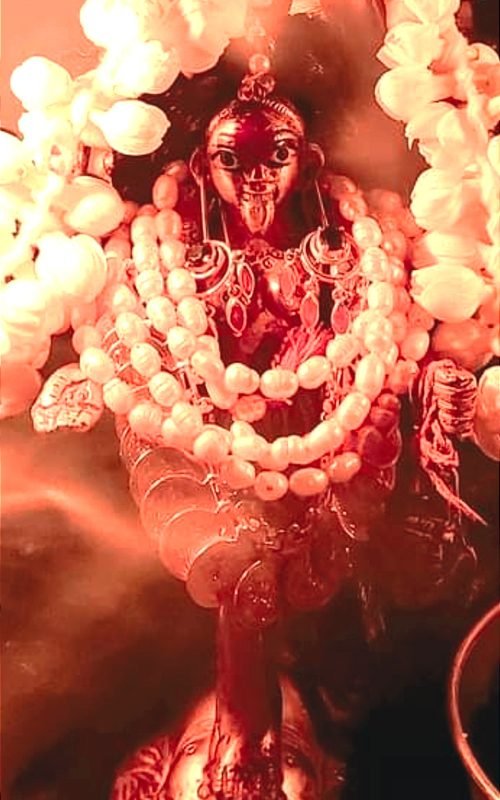
Episode – 4
Unlocking the mysteries of Mahamaya: Daksha’s story of devotion & divine testing
With Kama transformed into Ananga and Ratyamba’s plea accepted, the wheel of destiny begins to turn. In this pivotal episode, we witness the descent of Mahamaya as Sati — born to Daksha, yet bound to reunite with Shiva. But this isn’t merely a tale of divine marriage. It is the stage upon which karma, tapas, and bhakti clash and converge.
We follow the trail from Kamadeva’s ashes to the boon of Neelachala, from Rati’s devotion to Daksha’s intense tapasya, from Sati’s childhood devotion to her blazing penance that melts even Shiva’s heart. And in this divine romance, Manmatha returns — not as a villain, but as a spark in the sacred play.
But Kamakhya does not descend without a price. Sati’s mortal form holds a vow — the moment Daksha loses devotion, She will burn that body and ascend once again.
This is the quiet fire before the blaze. The Yoni has not yet fallen. Kamadeva has not yet been restored. But the leela has begun.
The ground of Neelachala stirs.
To read this episode, you shall click here.
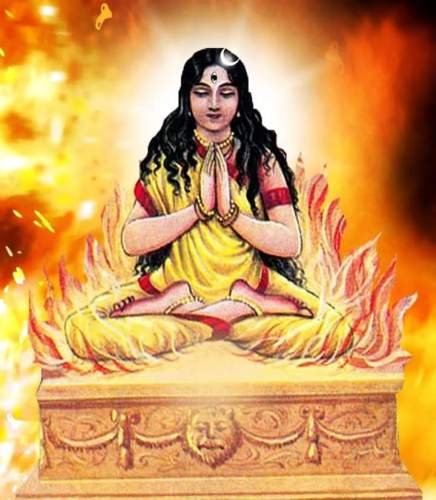
Episode – 5
Why Shiva Had to Fall in Love — Not a Romance, But a Curse
In this fierce unfolding of Kamakhya Tattva Bodha, we shatter the shallow myths of divine romance. This is not a tale of gods falling in love — it is the alignment of cosmic purpose through karma, tapas, and the burning fire of necessity.
Brahma, moved by ahamkara and divine duty, manipulates fate itself — not to unite lovers, but to compel the supreme ascetic, Mahadeva, to enter samsara. Why? So destruction may take form. So karma may ripen. So the curse he once cast in shame may now come to pass.
In this leela, we see the trembling thread of causality — Manmatha’s mischief, Brahma’s fall, Shiva’s mocking words, and the silent vow of Mahamaya — all converge to push the wheel of dharma forward. Shiva does not fall in love; he is drawn into a divine contract.
Sati’s longing, Daksha’s doubt, Brahma’s persuasion, and Shiva’s surrender — each are but instruments. The gods march with war drums and sacred conches to Daksha’s palace, not for a wedding, but for a rearrangement of the cosmos.
Behind it all, Kamakhya watches — unmoved, unbound, untouched by the maya even gods are tangled in.
The wheel turns. The Yoni is yet to fall. But the leela deepens.
To read this episode, you shall click here.
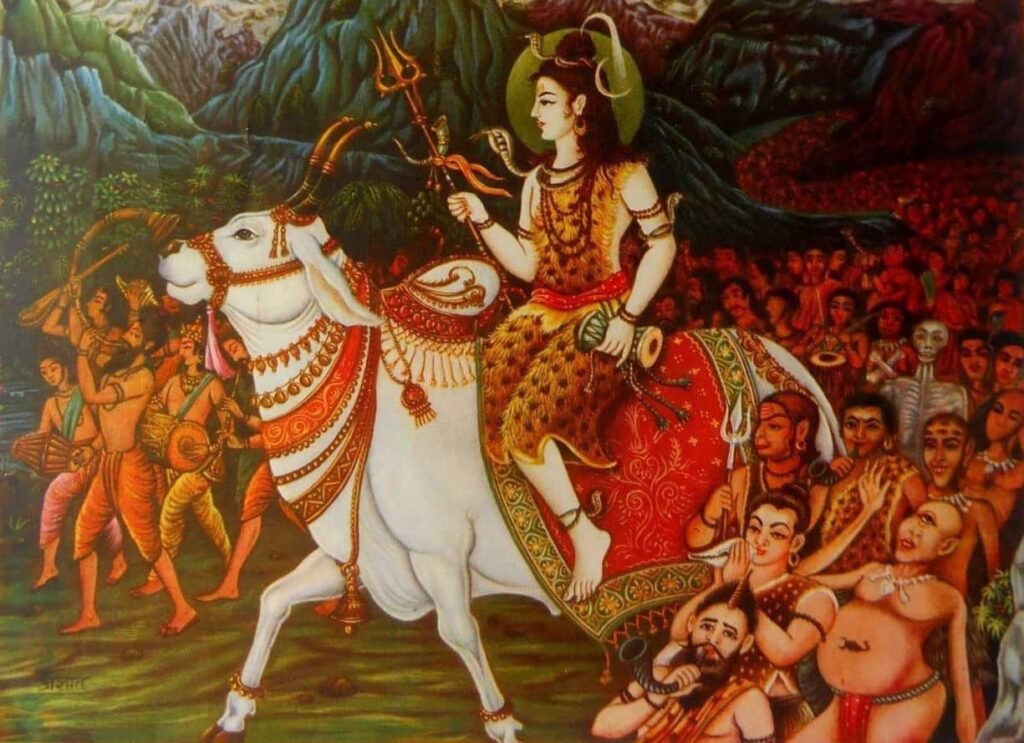
Episode – 6
The sacred union of Shiva & Sati – A tale of Desire, Dharma & Divine Oneness
Before Kamakhya’s Yoni descends upon Neelachala, the universe pauses to witness a moment of divine union — the sacred wedding of Mahadeva and Sati. But even this is no fairytale. It is a razor’s edge between kama and dharma, between divine duty and the storms of desire.
Adorned with serpents, tiger skin, and crescent moon, Mahadeva arrives not as a groom — but as a blazing force of timeless tapas. Daksha offers his daughter in solemn reverence, as devas chant Vedas and the cosmos vibrates in awe. Yet, in that very moment of sanctity, the test begins.
Brahma, consumed by lust, violates the sanctity of the wedding with a gaze unworthy of a creator. The heavens respond with rain, and Shiva — bound by his vow to Vishnu — lifts his trident to strike down even a god. Mahavishnu intervenes with his Supreme Form, reminding all that Brahma, Vishnu, and Shiva are but waves in the same formless ocean.
Shambhu spares Brahma — not out of mercy, but realization.
This is not mythology. This is tatva.
This is not indulgence. This is tapas.
Let modern minds remember: Kamakhya is not a license for lust.
She is the fire that tests even gods.
To read this episode, you shall click here.
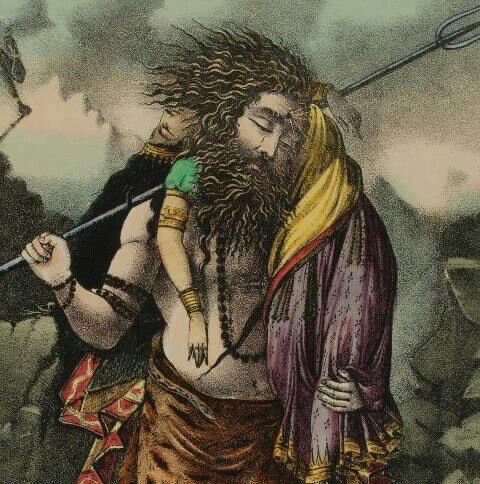
Episode – 7
Kamakhya’s Role in the Daksha Yagna: The Great Departure of Sati
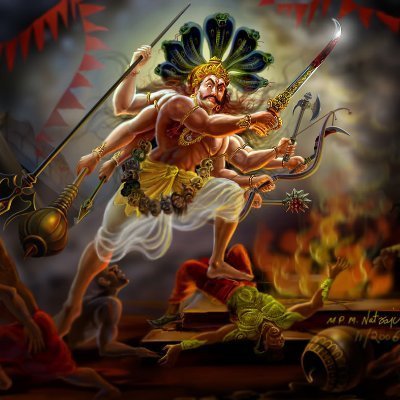
Episode – 8
Kamakhya’s Leela Behind Shiva’s Wrath: The Mahamaya Who Orchestrated Daksha’s Fall and Sati’s Exit
Episode – 9
The Scattering of Sati — The Beginning of Kamakhya Kshetra
Episode – 10
Kamakhya’s Yoni, Rati’s Resolve, and a Rishi’s Wrath
In these ten episodes, Mahamaya emerges not as a deity in myth, but as the architect of reality itself. From the moment Sati petitions for shelter to the cruel fire of cosmic anger; from her body’s fragmentation across the earth to the consecration of Shakti Pithas; from the reclamation of form in Kamadeva to the arrogance and downfall of Narakasura—every event is a stroke in Her cosmic choreography.
She is the force that converts grief into geography, illusion into architecture, desire into rebirth, and collapse into cosmic instruction. Even Shiva, the unmoving supreme, becomes vulnerable—moved by grief, guided by Mahamaya’s will.
By Episode X, as curses fall and worship transforms into secret Tantra, Mahamaya sends a clear message: not every worship is sacred, not every devotee is righteous, and not every curse is cruelty—some are the crucible of evolution.
Kamakhya then stands not merely as a temple or lore, but as the living embodiment of Her intelligence—where form arises from the formless, devotion becomes wisdom, and illusion becomes the greatest truth.
Frequently Asked Questions About Kamakhya, Temple & Story
What is the story of Kamakhya?
The Kamakhya story centers on the cosmic sacrifice of Sati, the divine grief of Shiva, and the scattering of Her sacred limbs to create the 51 Shakti Peethas. Sati’s Yoni (the cosmic source of creation) fell on Nilachal Hill. At this very location, Kamadeva, who had been incinerated by Shiva’s third eye, performed intense penance to the Goddess, was revived with divine form, and was granted release from the curse — giving the kshetra the name Kamakhya (where Kama was restored).
Why is there no idol in Kamakhya Temple?
Unlike most temples, the Kamakhya Temple garbhagriha contains no carved statue or murti. Instead, it enshrines the natural bedrock cleft resembling a Yoni, nourished by a continuous subterranean mountain spring. This aniconic sanctum represents the formless, unmanifest matrix from which all cosmic creation, sustenance, and dissolution arise.
What is the spiritual meaning of Kamakhya Tattva?
Kamakhya Tattva is the philosophical and tantric understanding of desire (Kama) as the primordial energy of consciousness. Rather than repressing desire or indulging blindly in it, Kamakhya Tattva teaches the alchemical transmutation of desire into devotion, wisdom, and spiritual liberation through strict sadhana and grace of Mahamaya.
What is Ambubachi Mela at Kamakhya Temple?
Ambubachi Mela is the annual celebration held in mid-June (Aashadha month) celebrating the annual menstrual cycle and creative rejuvenation of Mother Earth. The temple sanctum remains closed for three days while the subterranean spring flows, and reopens on the fourth day with grand festivities and the distribution of sanctified Raktavastra cloth.
Which sacred scriptures describe Kamakhya?
The primary scriptures detailing the rituals, philosophy, and stories of Kamakhya are the Kalika Purana, the Yogini Tantra, the Devi Bhagavata Purana, and the Shiva Purana.
